Liver Overloaded: The Hidden Reason Blood Sugar Won’t Go Down
Published: 18 Jan 2026
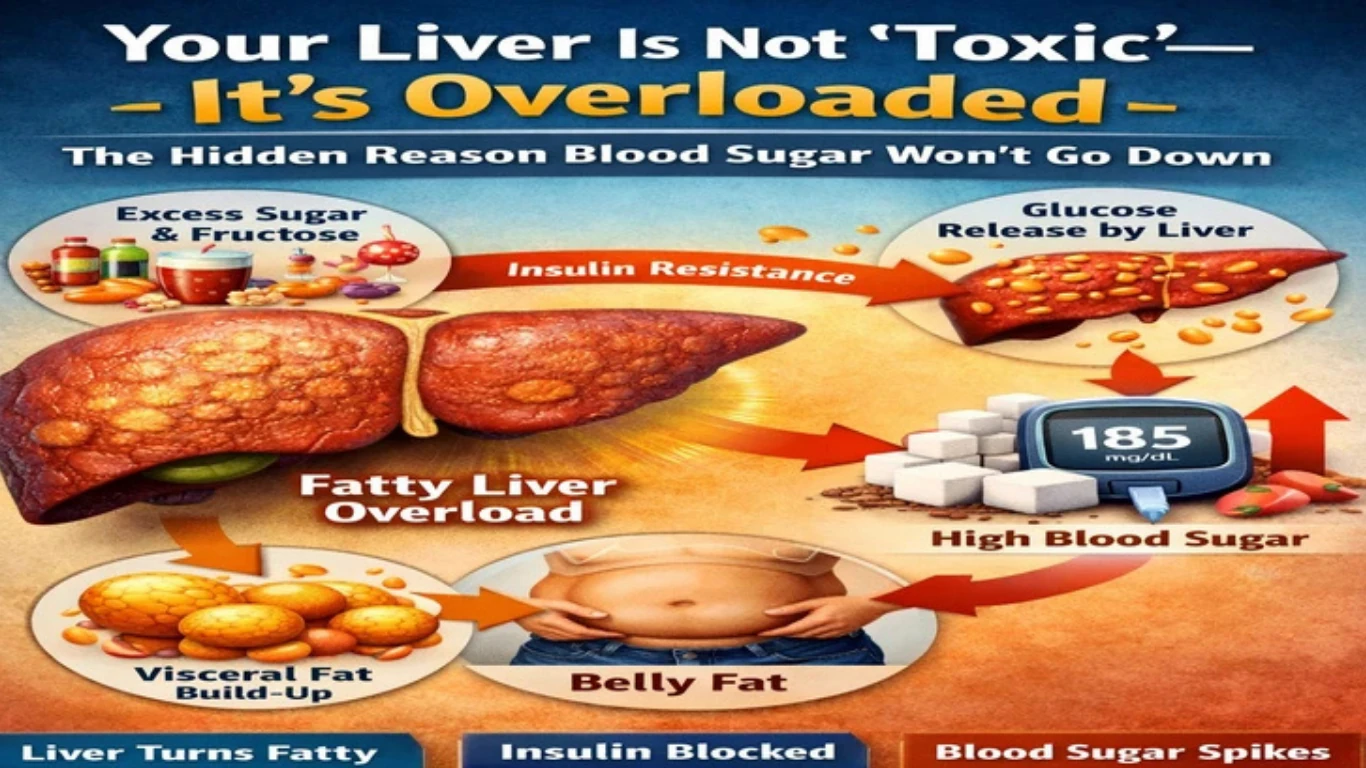
Table of Contents
Introduction:
If you are eating better, cutting sugar, and still watching your blood glucose stay stubbornly high, you are not failing.
Your liver might be overwhelmed.
This is not about toxins. It is about metabolic overload, and science has been quietly pointing to this for years.Let’s talk about what is actually happening inside your body.
The Big Myth: A “Toxic” Liver
The liver does not store toxins like a trash bin. According to Guyton and Hall Textbook of Medical Physiology, the liver’s job is constant detoxification. It converts harmful substances into water-soluble compounds so they can be excreted through bile or urine.
A healthy liver is always detoxing.
So if your blood sugar will not come down, the problem is rarely toxins. The real issue is metabolic congestion.
What Does Liver Overload Really Mean?
Liver overload happens when the liver receives more fuel than it can process.
This fuel includes:
• Excess glucose
• Fructose from sweetened foods and drinks
• Free fatty acids
• Chronic insulin signalling
Over time, the liver starts converting this excess fuel into fat.
This condition is known as non-alcoholic fatty liver disease (NAFLD), now also called metabolic associated fatty liver disease (MAFLD).
Multiple studies confirm that fatty liver is strongly linked with insulin resistance and poor blood sugar control.
How Liver Overload Blocks Blood Sugar Control
Here is where things get interesting.
1. The Liver Controls Fasting Blood Sugar
Your liver decides how much glucose enters your bloodstream when you are not eating.
In insulin resistance, the liver keeps releasing glucose even when blood sugar is already high.
Research published in Diabetes Care shows that hepatic insulin resistance is one of the earliest defects in type 2 diabetes.
So even if you eat less sugar, your liver keeps making more.
2. Fatty Liver Disrupts Insulin Signalling
When fat accumulates inside liver cells, it interferes with insulin receptors.
This means insulin knocks, but the liver does not listen.
According to studies in The Journal of Clinical Investigation, this leads to:
• Increased glucose production
• Higher fasting blood sugar
• Increased insulin levels
This is why many people have normal meals but abnormal glucose readings.
3. Fructose Overload Makes It Worse
Fructose is processed almost entirely in the liver. Unlike glucose, fructose bypasses insulin control and goes straight into fat production. Scientific reviews in Hepatology confirm that excessive fructose intake increases:
• Liver fat accumulation
• Insulin resistance
• Triglyceride production
This explains why people who “eat clean” but consume juices, honey, or dates still struggle with blood sugar.
Why Dieting Alone Often Fails
Calorie restriction without addressing liver metabolism often backfires. When the liver is overloaded, aggressive dieting increases stress hormones like cortisol.
Cortisol tells the liver to release more glucose. So blood sugar rises even when food intake drops. This has been documented in metabolic studies published in Endocrine Reviews.
That is why many people say, “I eat less, yet my sugar stays high.”
The Liver-Insulin-Belly Fat Connection
Visceral fat and liver fat talk to each other.
Fatty liver increases insulin resistance.
Insulin resistance increases fat storage around the abdomen.
This vicious cycle has been clearly described in Nature Reviews Endocrinology and also in the blog : Metabolic Health Crisis Explained: Liver Detox, Blood Sugar and Belly Fat Connection
So belly fat is not just cosmetic. It is a signal of liver stress.
Signs Your Liver Is Overloaded, Not Toxic
You may relate to some of these:
• Normal HbA1c but rising fasting glucose
• Belly fat despite calorie control
• Fatigue after meals
• Sugar cravings
• Elevated triglycerides
• Mildly raised ALT or AST
These are metabolic red flags, not detox symptoms.
Supporting Liver Metabolism the Scientific Way
This is not about miracle cleanses. Evidence-based strategies focus on reducing metabolic load.
Improve Insulin Sensitivity: Studies show that resistance training and walking after meals reduce hepatic glucose output.
Reduce Fructose Load: Limiting sweetened beverages and fruit juices has been shown to reduce liver fat within weeks.
Prioritise Protein: Adequate protein intake improves insulin signaling and reduces liver fat, as seen in trials published in The American Journal of Clinical Nutrition.
Support Mitochondrial Health: Nutrients like choline, glycine, and omega-3 fatty acids play a role in fat export from the liver.
Labeling the liver as “toxic” oversimplifies a complex metabolic process.
Understanding liver overload empowers people to make changes that actually work.
This approach aligns with modern metabolic science, not marketing trends.
FAQs:
Is liver detox necessary for blood sugar control?
No. Scientific literature does not support detox products. Improving insulin sensitivity and reducing liver fat is far more effective.
Can you have fatty liver with normal liver enzymes?
Yes. Many studies show that ALT and AST can remain normal despite significant liver fat.
Does fatty liver cause diabetes?
Fatty liver significantly increases the risk of insulin resistance and type 2 diabetes, according to longitudinal studies.
How long does it take to improve liver insulin resistance?
Clinical trials show improvement within 2 to 8 weeks with dietary and lifestyle changes.
Is fatty liver reversible?
Yes. Research consistently shows that fatty liver is reversible when metabolic load is reduced.
What are the common fatty liver symptoms?
Fatty liver often develops silently. Many people notice no symptoms at first. As liver fat increases, common signs can include persistent fatigue, heaviness or discomfort in the upper right abdomen, poor digestion, and difficulty losing weight. Some people also notice rising blood sugar or cholesterol before any liver pain appears.
What is the best fatty liver treatment?
There is no single medicine that cures fatty liver. The most effective treatment focuses on improving metabolism. This includes gradual weight loss, regular physical activity, better blood sugar control, and reducing excess sugar and processed foods. Clinical studies show that lifestyle changes can significantly reduce liver fat and improve insulin sensitivity.
What is the best fatty liver diet?
A fatty liver diet focuses on reducing metabolic stress on the liver. This means limiting sugary drinks, refined carbohydrates, and excess fructose. Meals rich in vegetables, lean protein, healthy fats, and whole foods support liver function. Research supports Mediterranean-style eating patterns for improving fatty liver and insulin resistance.
What is fatty liver grade 1?
Fatty liver grade 1 is the earliest and mildest stage. It means a small amount of fat has accumulated in liver cells. At this stage, liver damage is usually reversible. With dietary changes and improved physical activity, many people can completely normalize liver fat within months.
What are fatty liver symptoms in females?
Women may experience symptoms differently. Common fatty liver symptoms in females include unexplained weight gain around the abdomen, hormonal imbalances, fatigue, bloating, and difficulty controlling blood sugar. In some cases, symptoms become more noticeable after pregnancy or during hormonal transitions.
What is the treatment for fatty liver disease?
Fatty liver disease treatment focuses on addressing the root metabolic cause. Doctors usually recommend gradual weight reduction, better insulin control, improved sleep, and stress management. Scientific evidence shows that reducing liver fat improves blood sugar levels, lipid profiles, and overall metabolic health.
Final Thought
If your blood sugar refuses to drop, stop blaming willpower.
Your liver may simply be overwhelmed.
When you support liver metabolism instead of chasing detox myths, blood sugar control finally starts to make sense.
For more wellness related tips visit www.beautynwellnesshub.com






- Be Respectful
- Stay Relevant
- Stay Positive
- True Feedback
- Encourage Discussion
- Avoid Spamming
- No Fake News
- Don't Copy-Paste
- No Personal Attacks
- Be Respectful
- Stay Relevant
- Stay Positive
- True Feedback
- Encourage Discussion
- Avoid Spamming
- No Fake News
- Don't Copy-Paste
- No Personal Attacks
