BMI 101: What Body Mass Index Is, How to Calculate It
Published: 28 Jan 2026
Table of Contents
Introduction:
If you have ever typed your height and weight into Google and wondered whether your BMI number actually means anything, you are not alone. Body Mass Index is one of the most talked about and misunderstood health indicators in the world.
Let us break it down clearly, clinically, and without confusion.
What Is BMI (Body Mass Index)?
BMI stands for Body Mass Index. It is a simple numerical value used to estimate whether a person has a healthy body weight for their height.
BMI does not directly measure body fat. Instead, it acts as a screening tool that helps identify potential weight-related health risks at a population and individual level.
The concept of BMI was introduced in the 19th century and later adopted by the World Health Organization (WHO) and Centers for Disease Control and Prevention (CDC) as a standardized method for assessing weight categories in adults.
Why Is BMI Important for Health?
BMI matters because research consistently shows a strong association between abnormal BMI values and chronic diseases.
Studies published in The Lancet, New England Journal of Medicine, and WHO reports confirm that both high BMI and very low BMI are linked with increased mortality risk.
BMI helps healthcare professionals:
• Identify obesity-related health risks
• Screen for malnutrition
• Guide lifestyle and weight management decisions
• Monitor population health trends
It is not a diagnosis but it is a valuable first signal.
How to Calculate BMI
It is calculated using this formula:
BMI = weight (kg) ÷ height (m²)
Example
• Weight: 70 kg
• Height: 1.65 m
BMI = 70 ÷ (1.65 × 1.65)
BMI = 25.7
This person falls into the overweight category.
You can also use an online BMI calculator, but understanding the formula helps you interpret the number more accurately.
BMI Ranges and Classification
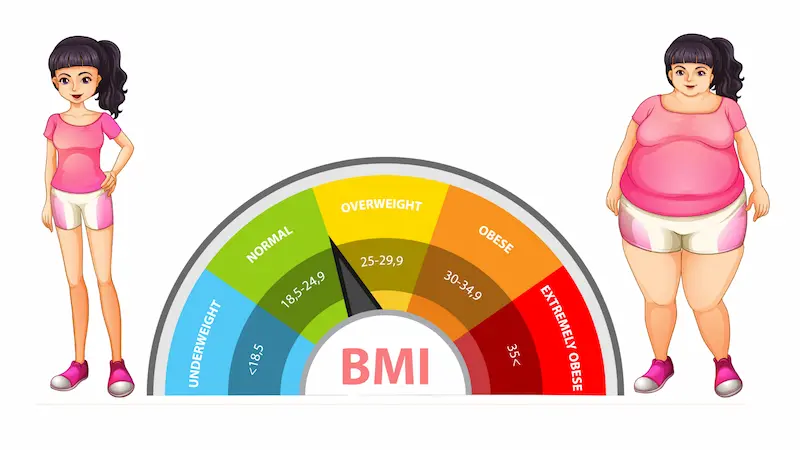
According to the World Health Organization, adult BMI categories are:
BMI Ranges
• Below 18.5 → Underweight
• 18.5 – 24.9 → Normal or Healthy weight
• 25 – 29.9 → Overweight
• 30 – 34.9 → Obesity Class I
• 35 – 39.9 → Obesity Class II
• 40 and above → Obesity Class III (Severe obesity)
These ranges are used globally for adults aged 18 years and above.
BMI and Obesity: Understanding the Relationship
BMI is one of the primary tools used to define obesity in clinical and public health research.
A BMI of 30 or higher is considered obese. Numerous studies from Google Scholar show that increasing BMI correlates with higher risk of:
• Type 2 diabetes
• Heart disease
• Hypertension
• Stroke
• Certain cancers
• Joint and mobility disorders
• Hormonal imbalance including PCOS
A large meta-analysis published in The Lancet Diabetes & Endocrinology confirms that obesity-related complications increase progressively with rising BMI.
Limitations of BMI
BMI is useful but it is not perfect.
It does not account for:
• Muscle mass
• Bone density
• Fat distribution
• Age and gender differences
• Ethnic variations
For example, athletes may have a high BMI due to muscle mass, while older adults may have normal BMI but high body fat.
That is why BMI should be interpreted alongside waist circumference, lifestyle habits, and clinical markers.
| What Is a Healthy BMI? |
|---|
|
A healthy BMI range is 18.5 to 24.9 for most adults. Research shows that people within this range have: However, health is not just a number. Sustainable habits matter more than chasing a specific BMI value. |
How to Lower BMI Naturally
Lowering BMI safely requires consistency, not extremes.
Let us talk about what actually works.
Best Exercises to Lower BMI
Physical activity plays a key role in reducing BMI by increasing calorie expenditure and improving insulin sensitivity.
Most Effective Exercises
• Brisk walking for 30 to 45 minutes daily
• Strength training 2 to 3 times per week
• Cycling or swimming
• High-intensity interval training for advanced individuals
Research from The Journal of Obesity shows that combining aerobic exercise with resistance training produces better BMI reduction than cardio alone.

Foods That Help Lower BMI
Diet quality matters more than calorie obsession.
BMI-Friendly Foods
• High-fiber vegetables and fruits
• Lean proteins like eggs, fish, legumes
• Whole grains
• Healthy fats from nuts and olive oil
Studies published in Nutrition Reviews show that fiber-rich diets are strongly associated with lower BMI and improved satiety.
Avoid ultra-processed foods, sugary drinks, and frequent refined carbohydrate intake.
Daily Habits That Lower BMI Naturally
Small habits compound into big results.
Lifestyle Habits That Matter
• Sleep 7 to 8 hours daily
• Manage stress through mindfulness or prayer
• Stay hydrated
• Eat slowly and mindfully
• Maintain consistent meal timings
Research from Sleep Medicine Reviews confirms that sleep deprivation directly contributes to higher BMI and obesity risk.
Can BMI Be Reduced Without Extreme Dieting?
Yes. Evidence strongly supports that gradual lifestyle changes outperform crash diets.
Rapid weight loss often leads to muscle loss and rebound weight gain, which can worsen BMI long-term.
BMI Across Different Life Stages
BMI interpretation can vary:
• Older adults may tolerate slightly higher BMI
• Women experience BMI changes during pregnancy and menopause
• Children require age-specific BMI percentiles
This is why professional guidance is recommended when it changes rapidly.
FAQs:
What is BMI in simple words?
BMI is a number that shows whether your weight is healthy for your height.
Is BMI accurate for everyone?
BMI is a useful screening tool but not a complete measure of health. Muscle mass and fat distribution are not included.
What BMI is considered obese?
A BMI of 30 or higher is classified as obesity.
How fast can BMI be reduced safely?
A reduction of 0.5 to 1 BMI point per month is considered safe and sustainable.
Can exercise alone lower BMI?
Exercise helps, but combining physical activity with dietary and lifestyle changes produces better results.
Final Thoughts:
BMI is a helpful starting point but it should not define your worth or health entirely.
Think of BMI as a health compass, not a verdict.
When combined with balanced nutrition, regular movement, stress management, and adequate sleep, BMI becomes a powerful guide toward long-term wellness.
Foe more wellness related tips visit www.beautynwellnesshub.com






- Be Respectful
- Stay Relevant
- Stay Positive
- True Feedback
- Encourage Discussion
- Avoid Spamming
- No Fake News
- Don't Copy-Paste
- No Personal Attacks
- Be Respectful
- Stay Relevant
- Stay Positive
- True Feedback
- Encourage Discussion
- Avoid Spamming
- No Fake News
- Don't Copy-Paste
- No Personal Attacks
