Meningitis Signs: Warnings Body Shows Before It Becomes Dangerous
Published: 24 Mar 2026
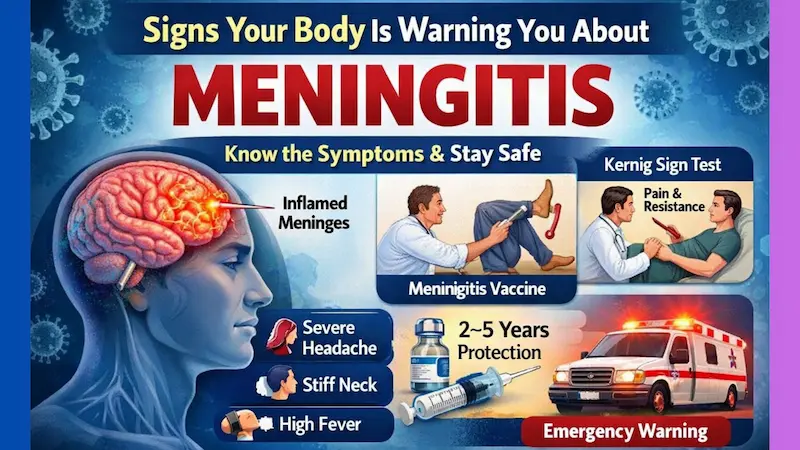
Table of Contents
These Are the Signs Your Body Is Warning You About Meningitis – Complete Medical Guide
Introduction:
Meningitis is one of the few medical emergencies where hours can make the difference between full recovery and life-threatening complications. Many people assume meningitis begins suddenly, but in reality, the body often sends early warning signals that are frequently mistaken for flu, fatigue, or minor infections.
Understanding these signs can help save lives.
This evidence-based guide explains:
• Early meningitis symptoms
• How meningitis can develop from flu
• Physical examination tests doctors use
• The meaning of the Kernig sign
• Meningitis vaccine duration and side effects
• When to seek emergency care
What Is Meningitis?
Meningitis is inflammation of the meninges, the protective membranes surrounding the brain and spinal cord.
It can be caused by:
• Bacteria (most dangerous)
• Viruses (more common)
• Fungi (rare)
• Autoimmune reactions
When inflammation increases pressure around the brain, neurological damage may occur rapidly.
Meningitis Signs Your Body Shows Before Severe Meningitis
Many patients initially think they only have flu or exhaustion.
⚠️ Common Early Warning Signs
• Persistent fever
• Severe or unusual headache
• Neck stiffness
• Sensitivity to light (photophobia)
• Nausea or vomiting
• Extreme fatigue
• Confusion or difficulty concentrating
• Dizziness or vertigo
Unlike normal viral illness, symptoms progress quickly.
Can You Get Meningitis From Flu?
Yes – and this is widely misunderstood.
Meningitis from Flu: How It Happens
Influenza weakens immune defenses, allowing bacteria to invade the bloodstream and reach the meninges.
Possible progression:
Flu infection → immune suppression → secondary bacterial infection → meningitis
High-risk groups include:
• Children
• Elderly individuals
• Immunocompromised patients
• People with chronic illnesses
If flu symptoms suddenly worsen with neck stiffness or confusion, urgent evaluation is necessary.
Meningitis Physical Exam Tests Doctors Perform
Doctors rely on neurological examination before laboratory confirmation.
- Neck Rigidity Test
Patient cannot flex neck forward due to pain and stiffness.
When the neck is bent forward, knees involuntarily flex.
- Kernig Sign (Classic Meningitis Test)
The meningitis Kernig sign is checked as follows:
• Patient lies flat.
• Hip flexed to 90 degrees.
• Doctor attempts to straighten the knee.
✅ Positive Kernig sign: Pain or resistance occurs.
This indicates irritation of the meninges.
Although not 100% sensitive, it remains an important clinical clue.
Other Diagnostic Tests
After physical examination, doctors may order:
• Lumbar puncture (CSF analysis) – gold standard
• Blood cultures
• CBC and inflammatory markers
• Brain CT or MRI (if needed)
Who Needs Vaccination?
• Students living in hostels
• Healthcare workers
• Travelers
• Military recruits
• Immunocompromised individuals
Meningitis Vaccine Side Effects
Most side effects are mild and temporary.
Common Side Effects
• Injection site pain
• Mild fever
• Fatigue
• Headache
• Muscle aches
Rare Effects
• Allergic reaction (extremely uncommon)
Scientific studies confirm meningitis vaccines are highly safe and life-saving.
When Meningitis Becomes an Emergency
Seek immediate medical care if you notice:
🚨 High fever + stiff neck
🚨 Confusion or altered consciousness
🚨 Seizures
🚨 Sensitivity to light
🚨 Persistent vomiting
🚨 Rash with fever (possible meningococcal infection)
Delaying treatment increases risk of:
• Brain damage
• Hearing loss
• Sepsis
• Death
How Fast Does Meningitis Progress?
Bacterial meningitis can worsen within 24–48 hours.
This is why early symptoms must never be ignored.
Prevention Strategies
Evidence-based prevention includes:
• Vaccination
• Hand hygiene
• Avoid sharing utensils during infections
• Treat respiratory infections promptly
• Strengthening immunity through adequate nutrition and sleep
✅ Evidence-Based Facts About Meningitis
• Globally, over 2.5 million cases of meningitis occur every year (WHO data).
• Bacterial meningitis has a case fatality rate of 10–15%, even with treatment.
• Around 1 in 5 survivors may develop long-term complications such as hearing loss or neurological impairment.
• The most common bacterial causes include:
• Neisseria meningitidis
• Streptococcus pneumoniae
• Haemophilus influenzae type b
• Viral meningitis is more common but usually less severe.
• Early antibiotic treatment reduces mortality significantly within the first 24 hours.
• Vaccination programs have reduced meningitis deaths by millions worldwide, yet outbreaks still occur due to changing bacterial strains and vaccination gaps.
• College dormitories and crowded environments increase transmission risk by 3–5 times.
• Seasonal peaks often follow respiratory infection waves, especially influenza outbreaks.
🧠 Why Meningitis Is Emerging at Higher Rates in the USA
Why Are Meningitis Cases Increasing in the United States?
Recent epidemiological reports from the CDC show localized increases in meningitis cases across certain regions of the United States. Several interconnected public health factors are contributing to this rise.
- Decline in Routine Vaccination Uptake
Post-pandemic healthcare disruptions led to delayed childhood and adolescent vaccinations. Lower immunization coverage allows meningococcal bacteria to circulate more easily within communities.
- Increased International Travel
Global mobility enables rapid transmission of infectious strains between countries, introducing new bacterial variants into populations with incomplete immunity.
- Crowded Living Environments
University dormitories, military housing, and shared accommodations create ideal conditions for respiratory droplet transmission – the primary route for meningococcal spread.
- Post-Viral Immune Vulnerability
Higher influenza and respiratory infection rates weaken mucosal immunity, increasing susceptibility to secondary bacterial infections, including meningitis.
- Emerging Bacterial Strains
Some outbreaks involve evolving meningococcal serogroups not fully covered by earlier vaccination programs, requiring updated booster strategies.
Public health experts emphasize that meningitis remains preventable, but awareness and vaccination compliance are critical.
🛡️ How to Protect Yourself From Meningitis Through Daily Habits
Daily Habits That Reduce the Risk of Meningitis
While vaccination is the strongest protection, everyday behaviors significantly lower infection risk.
✅ 1. Maintain Respiratory Hygiene
• Wash hands regularly.
• Avoid touching face with unwashed hands.
• Cover coughs and sneezes.
Respiratory bacteria spread primarily through droplets.
✅ 2. Do Not Share Personal Items
Avoid sharing:
• Water bottles
• Utensils
• Lip products
• Toothbrushes
Saliva transmission is a major risk factor.
✅ 3. Strengthen Immune Function Daily
Support immune defense through:
• Adequate sleep (7–8 hours)
• Balanced nutrition
• Vitamin-rich foods
• Hydration
Strong immunity reduces infection progression.
✅ 4. Treat Flu and Respiratory Infections Early
Never ignore worsening symptoms after flu, especially:
• Severe headache
• Neck stiffness
• Persistent fever
Secondary infections can develop rapidly.
✅ 5. Stay Updated on Vaccination
High-risk individuals should follow booster schedules, especially:
• Students in hostels
• Healthcare workers
• Travelers
• Immunocompromised individuals
✅ 6. Reduce Close Contact During Outbreaks
If meningitis cases are reported locally:
• Avoid crowded indoor spaces.
• Wear masks in high-risk settings.
• Monitor symptoms closely.
Expert Insight
Meningitis prevention is not based on one action alone. It is a combination of vaccination, awareness, and consistent daily protective habits that creates effective defense against infection.
Medical Disclaimer
This article is for educational purposes and does not replace professional medical diagnosis or treatment. Seek immediate medical care for suspected meningitis symptoms.
❓ People Also Ask
What are the first warning signs of meningitis?
Early meningitis symptoms usually include fever, severe headache, neck stiffness, nausea, sensitivity to light, and unusual fatigue. Some people experience confusion or dizziness. Symptoms may initially resemble flu but worsen quickly, which is why early medical evaluation is essential.
Can meningitis start like the flu?
Yes. Many cases begin with flu-like symptoms such as fever, body aches, and fatigue. Influenza can weaken immune defenses, allowing bacteria or viruses to infect the meninges. Sudden neck stiffness, confusion, or severe headache after flu symptoms may indicate meningitis.
What is Kernig sign in meningitis?
Kernig sign is a physical examination test used to detect meningeal irritation. When a patient’s hip is bent at 90 degrees, attempting to straighten the knee causes pain or resistance. A positive Kernig sign may suggest meningitis but requires laboratory confirmation.
How do doctors test for meningitis?
Doctors perform neurological exams followed by diagnostic tests such as lumbar puncture (spinal tap), blood cultures, and imaging scans if necessary. Physical exam signs like neck rigidity, Kernig sign, and Brudzinski sign help clinicians suspect meningitis before confirming diagnosis.
How long does the meningitis vaccine last?
Protection depends on the vaccine type. MenACWY vaccines typically last about five years, while MenB vaccines may provide protection for two to three years. Booster doses are recommended for individuals at ongoing risk or during outbreaks.
What are meningitis vaccine side effects?
Most side effects are mild and temporary, including injection site pain, fatigue, headache, or low-grade fever. Serious reactions are extremely rare. Medical studies confirm that meningitis vaccines are safe and significantly reduce severe disease risk.
Is meningitis contagious?
Some forms, especially meningococcal meningitis, spread through respiratory droplets and close contact such as coughing, kissing, or sharing utensils. Casual contact usually does not transmit infection. Good hygiene and vaccination greatly reduce transmission risk.
How fast can meningitis become serious?
Bacterial meningitis can progress rapidly within 24–48 hours. Symptoms may worsen suddenly, leading to confusion, seizures, or unconsciousness. Immediate treatment with antibiotics significantly improves survival and reduces complications.
Who is most at risk for meningitis?
Higher-risk groups include infants, teenagers, college students living in dormitories, elderly individuals, immunocompromised patients, and travelers to outbreak regions. Crowded living conditions increase exposure to meningitis-causing bacteria.
Can meningitis be prevented naturally?
While vaccination provides the strongest protection, daily habits help reduce risk. These include hand hygiene, avoiding shared utensils, maintaining strong immunity through nutrition and sleep, and treating respiratory infections promptly.
Key Takeaway: Listen When Your Body Warns You
Meningitis rarely begins silently. The body often signals danger through:
• Persistent headache
• Neck stiffness
• Fever with neurological symptoms
• Sudden worsening after flu
Recognising these signs early can prevent severe complications and save lives.
For more wellness related content visit our website www.beautynwellnesshub.com






- Be Respectful
- Stay Relevant
- Stay Positive
- True Feedback
- Encourage Discussion
- Avoid Spamming
- No Fake News
- Don't Copy-Paste
- No Personal Attacks
- Be Respectful
- Stay Relevant
- Stay Positive
- True Feedback
- Encourage Discussion
- Avoid Spamming
- No Fake News
- Don't Copy-Paste
- No Personal Attacks
