Drink Water in This Way to Avoid Dehydration in Summer
Published: 2 May 2026
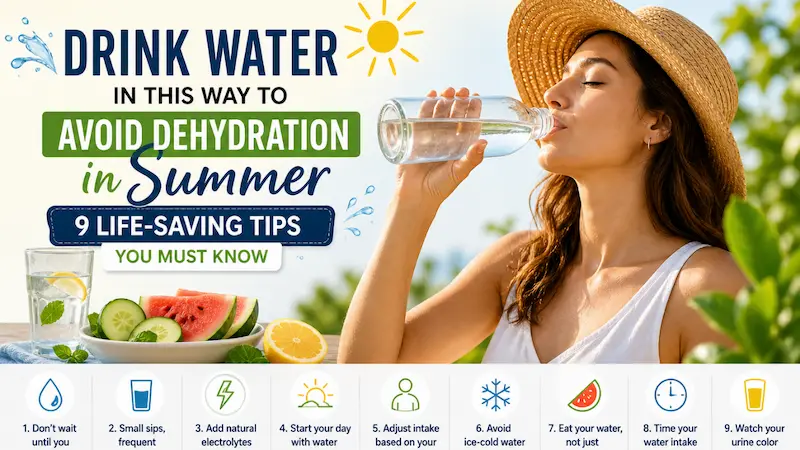
Table of Contents
Drink Water in This Way to Avoid Dehydration in Summer: 9 Life-Saving Tips You Must Know
Summer can feel beautiful, but dehydration quietly drains your energy, dulls your skin, and affects your overall health. Many people believe drinking “more water” is enough. In reality, how you drink water matters just as much as how much you drink.
If you often feel tired, dizzy, or notice skin darkening and dryness during heatwaves, your hydration strategy might be the problem.
Let’s break this down in a simple, practical, and science-backed way.
Why Dehydration Is More Dangerous in Summer
When temperatures rise, your body loses water through sweat at a much faster rate. According to research published in the Journal of Applied Physiology, even mild dehydration can reduce physical performance, impair mood, and affect cognitive function.
In hot climates like Pakistan and other tropical regions, dehydration can also contribute to:
- Skin dullness and pigmentation
- Headaches and fatigue
- Electrolyte imbalance
- Increased risk of heat exhaustion
That’s why hydration is not just about drinking water. It is about smart hydration.
Tip 1: Don’t Wait Until You Feel Thirsty
Thirst is actually a late signal. By the time you feel thirsty, your body is already mildly dehydrated.
Studies in Nutrients Journal show that early hydration helps maintain optimal body temperature and organ function.
What to do:
Drink water in this way, Sip water throughout the day instead of drinking large amounts at once.
Tip 2: Follow the “Small Sips, Frequent Intake” Rule
Drinking a large glass of water in one go may not hydrate you efficiently. Your body absorbs water better when consumed gradually.
Why this works:
It improves absorption and reduces sudden electrolyte dilution.
Simple habit:
Drink water in this way, Take a few sips every 20 to 30 minutes, especially during heat exposure.
Tip 3: Add Natural Electrolytes to Your Water
Plain water is great, but during extreme heat, your body also loses sodium, potassium, and magnesium.
According to WHO hydration guidelines, electrolyte balance is essential for preventing dehydration.
Drink water in this way:
- Add a pinch of salt and lemon to water
- Use coconut water occasionally
- Include fruits like watermelon and oranges
This keeps your hydration more effective.
Tip 4: Start Your Day with Water Before Anything Else
After 7 to 8 hours of sleep, your body wakes up dehydrated.
Drinking water first thing in the morning helps:
- Kickstart metabolism
- Flush toxins
- Improve skin hydration
This simple habit can actually improve your energy levels throughout the day.
Tip 5: Adjust Water Intake Based on Your Body and Climate
There is no universal “8 glasses rule” for everyone. Research from the National Academies of Sciences suggests hydration needs vary based on:
- Body weight
- Physical activity
- Environmental temperature
General guide to drink water in this way:
Aim for 2.5 to 3.5 liters daily in hot weather, but listen to your body.
Tip 6: Avoid Ice-Cold Water in Extreme Heat
It might feel refreshing, but very cold water can slow digestion and constrict blood vessels.
Better choice:
Cool or room temperature water supports better absorption and digestion.
Tip 7: Eat Your Water, Not Just Drink It
Hydration does not only come from liquids. Foods rich in water content can significantly improve hydration levels.
Best hydrating foods:
- Cucumber
- Watermelon
- Strawberries
- Yogurt
Research in American Journal of Clinical Nutrition shows that water-rich foods contribute meaningfully to daily hydration.
Tip 8: Time Your Water Intake Around Sun Exposure
If you step out in the sun without hydrating first, dehydration risk increases rapidly. so drink water in this way during sun exposure.
Smart timing:
- Drink water 20 minutes before going outside
- Rehydrate immediately after returning
This reduces the impact of heat stress on your body.
Tip 9: Watch Your Urine Color for Hydration Status
This is one of the simplest and most reliable indicators.
- Pale yellow → well hydrated
- Dark yellow → dehydration
It sounds basic, but it works.
How Proper Hydration Improves Your Skin
Hydration is directly linked to skin health. Scientific studies show that adequate water intake improves:
- Skin elasticity
- Barrier function
- Overall glow
For those struggling with summer skin darkening and dullness, combining proper hydration with topical skincare like hyaluronic acid and antioxidants can enhance results. Read Full blog on “Skin Barrier 101: Discover Why Your Skincare Isn’t Working and How you can Fix it !”
Common Hydration Mistakes You Should Avoid
A lot of people unknowingly make these mistakes:
- Drinking water only when thirsty
- Overconsuming caffeine and sugary drinks
- Ignoring electrolytes
- Drinking excessive water at once
Fixing these can instantly improve your hydration levels.
FAQs
How much water should I drink in summer?
Most adults need 2.5 to 3.5 liters daily, depending on activity and climate.
Can drinking too much water be harmful?
Yes. Overhydration can dilute electrolytes and cause imbalance. Balance is key.
Is cold water bad in summer?
Very cold water is not ideal. Room temperature or slightly cool water is better for absorption.
Which drinks help prevent dehydration?
Water, coconut water, lemon water, and electrolyte drinks are effective.
Does dehydration affect skin tone?
Yes. Dehydration can lead to dullness, dryness, and uneven skin tone.
Final Thoughts
Staying hydrated in summer is not just about drinking more water. It is about drinking it the right way.
These small, science-backed habits can protect your body, improve your skin, and keep your energy stable even during extreme heat.
Start with one or two changes today, and you will feel the difference.
For more wellness related content do visit www.beautynwellnesshub.com





- Be Respectful
- Stay Relevant
- Stay Positive
- True Feedback
- Encourage Discussion
- Avoid Spamming
- No Fake News
- Don't Copy-Paste
- No Personal Attacks
- Be Respectful
- Stay Relevant
- Stay Positive
- True Feedback
- Encourage Discussion
- Avoid Spamming
- No Fake News
- Don't Copy-Paste
- No Personal Attacks
